Friday, July 20, 2012

배터리 충전 효율

전기차의 경우


에너지 효율성

전기자동차의 에너지 효율성은 전기에너지의 충전과 방전 효율에 따라 정해진다. 보통 한번 충전하였을 경우 충전량의 약 70%에서 85%의 전기에너지가 실제 사용이 가능하다. 또한 충전간에 약 9.5%정도의 에너지 손실이 일어난다. 보통의 전기자동차는 이 동력 소비의 대략 20%정도는 배터리 충전의 비효율성 때문이다. 휘발유자동차의 대부분의 에너지는 열로 발산되어 없어진다. 즉, 휘발유 자동차 엔진은 열효율성이 20%밖에 안 되기 때문에 효율성이 낮다. 따라서 전기자동차의 에너지 효율성은 휘발유자동차의 에너지 효율성보다 좋고, 심지어 하이브리드 자동차의 에너지 효율성보다 뛰어나다. 그러나 에너지원으로부터 바퀴 구동까지의 에너지 효율을 따져보면 꼭 그렇지도 않다. 전기자동차가 요하는 전기는 발전소에서 만들어지는데, 발전소의 발전효율은 40%가 넘지 않고, 송전시 손실되는 에너지도 많기 때문이다.

급속 충전기는 저속충전기에 비해서 보다 월등한 장점이 몇 가지 있다. 한가지 분명한 것은 충전 시간이 짧다는 것이다. 급속 충전기가 완전 충전할 때 까지의 소요시간은 충전율 뿐만 아니라 충전상태, 배터리의 용량과 종류에 따라 달라진다. 완전 방전된 니켈 카드늄 배터리는 0.5C의 충전율로 약 2시간이면 충전이 완료된다. 1C로 하면 약 1시간이 걸린다.

완전충전이 되면, 충전기는 자동적으로 배터리의 자가방전을 보충하기 위한 trickle 충전 상태로 전환된다. 다양한 크기의 배터리를 충전할 수 있다는 점에서 급속 충전기는 저속 충전기 보다 우월하긴 하지만, 그래도 배터리의 크기와 종류에 있어서 제한이 있다.

제세한 이야기는 이곳에서...
http://myhome.hananet.net/~whatid/ba02.htm


급속충전기의 높은 충전 전류와 충전시 배터리를 모니터링 해야 한다는 점 때문에, 반드시 제조업자가 지정한 배터리만을 충전해야 한다. 최근의 급속 충전기들은 일반적으로 NiCd와 NiMH 배터리 모두를 충전할 수 있다. SLA와 리튬 이온 배터리는 니켈을 기본으로 하는 배터리와는 충전 알고리즘이 상당히 다르기 때문에, 이들 배터리까지 충전할 수 있도록 설계되지 않은 충전기로는 SLA와 리튬 이온 배터리를 충전할 수 없다. 일부 배터리 제조업자는 전자적으로 배터리 종류와 충전율을 설정할 수 있도록 코드화 하였다. 따라서 지정된 배터리가 충전기에 연결되면 충전전류와 알고리즘이 자동으로 맞춰진다.

통상, 저속 충전기 보다는 급속 충전기가 더 좋다. 저속 충전기는 배터리의 성능과 수명을 단축시키는 현상 즉, 전극 내부의 극판에 커다란 크리스탈 판을 형성시키는 것으로 알려져 있다. 하지만 급속 충전기를 사용하면서 충전하는 동안 온도 상승을 제어하지 못한다면 차라리 저속 충전기를 사용하는 것이 좋다. (역자 주: 한번 배터리를 구워버리면 성능회복은 영원히 안되기 때문이다.)

Trickle 충전시에는 배터리가 약간 미지근한 온도가 된다. 만지기에 뜨거운 정도가 되면 trickle 충전이 너무 높게 설정되어 있다는 것으로 이때는 과충전으로 인해서 배터리는 회복할 수 없는 상처를 입게 된다. 그래서 배터리를 trickle 충전상태로 일주일 이상 계속해서 놓아두는 것은 trcikle 충전전류가 올바르게 설정되었다고 해도 권할만한 일이 아니다. 혹 배터리를 항상 사용가능한 상태로 충전기에 연결해 놓아야 한다면, 반드시 매달 한번씩은 완전 방전/충전을 하는 정련(exercise cycle)을 해주어야 한다.

아래의 내용에서는 다양한 충전방법에 대해서 알아보고 충전기들의 성능을 비교해 보고자 한다. 저속충전기 보다 급속충전기가 더 좋다는 것은 거의 상식으로 되어 왔는데, 제대로 설계된 폐쇄 루프형 충전기(이 충전기는 배터리와 충전기가 서로 신호를 주고 받으며, 완전 충전상태가 되면 급속충전을 중지시킨다)는 배터리의 수명과 성능에 최고로 여겨지고 있다.


1 니켈 카드늄 (NiCd) 배터리의 충전방법

배터리 제조업자들을 새 니카드 전지를 사용하기 전에 24시간 가량 저속충전할 것을 권한다. 이 최초의 trickle 충전을 해주어야, 오래 보관하는 동안 셀의 바닥에 전해액이 침하되어 나타나는 격리판의 마른 반점을 제거하기 위해 전해액을 재분배해 줄 수 있게 된다. 뿐만 아니라 각 셀이 보관기간동안 서로 다른 수준의 자가방전을 해왔던 것을 배터리 팩 내의 각 셀을 모두 똑같은 수준의 충전 수준을 회복할 수 있도록 도와준다.

일부 제조업자들은 니카드 배터리를 만충전 해서 출하하지 않는다. 이런 배터리들이 용량을 완전히 회복하려면 사용자가 수회의 충/방전을 반복하거나 배터리 분석기(analyzer) 혹은 정상적 사용(normal use) 방법을 이용해야 한다. 많은 경우에 배터리의 완전한 용량회복을 위해서는 50에서 100회의 충/방전이 필요하다. 일부 Sanyo와 Panasonic 니카드 배터리는 단 5회 내지 7회의 충/방전만으로 완전한 용량회복이 가능하다. 초기의 용량이 달라질 수는 있지만 한번 용량이 회복되고 나면 매우 꾸준하게 유지된다.

대부분의 니카드 전지들은 한 두 시간의 급속충전이 적당하지만, 급속충전은 5℃에서 45℃ 사이에서만 이루어져야 한다. 니카드 전지가 5℃ 이하에서 충전되면, 산소 재결합 효과가 엄청나게 감소하고 전지 내부에 압력 축적이 일어난다. 때때로, 전지의 안정판이 열려서 수소가 발생할 수도 있다.

낮은 온도에서 배터리의 느린 물질대사를 보충하기 위해서는, 특히 충전의 시작과 종료시점에서 0.1C의 저충전방법을 사용해야 한다. 낮은 온도에서 충전시키는 특별한 방법이 있다. 니카드 배터리는 극히 낮은 온도에서 충전할 수 있는 유일한 상용배터리이다.

높은 온도에서 니카드 배터리의 충전능력은 급격히 떨어진다. 상온에서 충전할 때 100%가 충전되고, 45℃에서 충전될 때는 70%만을, 60℃에서 충전될 때는 45%만이 충전된다.

차량에 부착된 충전기가 더운 여름에 충전 성능이 떨어지는 이유가 바로 이것이다. 높은 온도에서 충전시키는 특별한 방법도 있다.

대부분의 재충전 셀에는 올바르게 충전되지 않을 때, 과도한 압력을 완화시켜주는 안전 배출구가 있다. 니카드의 안전 배출구는 150에서 200PSIG(자동차 타이어의 압력은 30PSIG)가 되면 열리도록 설계되어 있다. 높은 압력 상승으로 배출구가 열려서 가스가 배출될 때, 배터리에 손상이 일어나지는 않지만, 일부 전해액이 유실되거나 봉인이 약해질 수도 있다. 이런 경우에는 배출구가 열릴 때, 백색 가루가 나타나게 된다.

일부 상용 급속 충전기 중에는 배터리의 상태를 최우선적으로 고려하지 않도록 설계된 것들이 있다. 온도 감지만을 이용해서 배터리의 충전 상태를 측정하는 종류의 충전기가 특히 그렇다. 감지 서미스터(thermistor)나 온도 스위치의 허용오차가 크고, 셀에 대한 부착 위치 때문에 온도 감지라는 것은 부정확하다. 충전하는 동안 주위온도나 직사광선에 노출되는 것도 온도감지에 영향을 준다. 이런 충전기 제조업자들이 어떤 조건하에서도 완전 충전을 해내기 위해서는 배터리를 완전히 "구워"버려야 한다. 45℃이상의 온도는 배터리에 해가 되며, 반드시 피해야 한다. 특정온도, 예를 들어 50℃가 되면 충전을 중지하는 종류의 충전기는 배터리 수명을 단축시킨다.

가장 발전된 충전기는 절대온도를 측정하는 것이 아니라 셀의 온도 변화를 측정해서 완전 충전을 종료한다. 이런 종류의 충전기는 배터리에 더 좋긴 해도, 여전히 완벽한 감지를 위해서 셀에 충분한 온도 스윙(swing)을 제공해 주어야 한다.

만충전 된 배터리가 계속해서 토핑(topping) 충전되면 과충전이 발생한다. 사용할 때마다 핸드폰이나 휴대용 무전기를 충전기에서 제거해야 하는 차량용 혹은 고정용 충전기는 이것을 다시 충전기에 올려 놓을 때마다 급속 충전이 시작되기 때문에 배터리에 더욱 무리를 주게 된다.

IC 제어장치를 사용해서 배터리의 전압과 전류 혹은 다른 변수들을 감지하고 특별한 신호가 발생하면 충전을 중지시킬 수 있는 등 더욱 정확하게 만충전에 도달할 수 있다. 특별한 신호 중의 하나는 Negative Delta V(NDV)로 알려진 것으로, 만충전시에 전압이 떨어지는 경우이다.

NDV는 개방형 납산 니카드 충전기와 서미스터가 없는(혹은 필요한) 배터리 분석기에 권장되는 만충전 방법이다. 확실한 측정을 위해 충분한 전압 저하를 얻으려면 충전율이 0.5C 이상은 되어야 한다. 그리고 팩 내의 모든 셀이 충방전 특성이 같은 것끼리 잘 매치되어 있어야 한다. NDV에 의한 전압저하가 불충분하면 급속 충전상태가 계속되기 때문에 과충전으로 인해 과도한 열이 발생된다. NDV를 이용한 충전기는 어떤 조건에서도 안전하게 충전하기 위한 또다른 충전 중단 장치를 가지고 있어야 한다.

표준형 니카드의 효율적 충전 요소는 저속 충전기 보다는 급속 충전기라고 할 수 있다. 1C의 충전율에서, 일반적인 충전효율은 1.1 혹은 91%라고 말할 수 있다. 저속충전기(0.1C)는 효율이 1.4 혹은 71%로 떨어진다. 이것은 충전 에너지의 단 "1.0"부분만 배터리에 흡수되고 나머지 0.1이나 0.4 부분은 주로 열손실을 통해서 소실된다는 것이다.

1C의 충전율로 니카드가 완전 충전되는 시간은 60분이 약간 넘는다.(1.1 충전효율에서 66분이 걸림) 충전시간은 배터리가 부분적으로 방전되었거나 메모리 현상 등으로 만충전이 될 수가 없을 때 더 짧아진다. 0.1C의 충전율로 니카드의 충전시간은 14시간이 걸린다.

배터리는 충전 과정의 최초 70%에서 대부분의 에너지를 흡수하며, 배터리는 차가운 상태가 유지된다. 사실, 급속충전용으로 만들어진 니카드 배터리에는 C율의 몇 배에 이르는 전류도 적용될 수가 있다. 초급속 충전기는 이런 특별한 현상을 이용할 수가 있어서 수분안에 배터리 용량의 70%를 충전할 수가 있다. 시간만 충분히 있다면, 만충전까지 충전이 계속되지만 전류를 많이 떨어트려야 한다.

전지 용량의 70%가 충전되면, 에너지 흡수량이 점점 줄어든다. 셀이 과도한 가스를 발생시키기 시작하면 전지내의 압력과 온도가 증가한다. 충전도 점점 안되기 시작해서 만충전에 도달하면 과충전되기 시작한다.

초고용량 니카드 배터리는 1C로 충전시키면 표준 니카드 배터리 보다 열이 더 상승하는 경향이 있다. 이런 현상은 부분적으로 배터리의 내부 임피던스가 증가하기 때문에 일어나는 현상이다. 최적의 충전성능을 얻기 위해서는 충전 초기에 높은 전류를 사용하고 이후에 충전 수용도가 감소함에 따라 낮은 충전율?


[필독] KL-4800A 배터리팩 충전효율 및 손실효율 분석
깜냥관리자2011-03-21 09:12:31
5470


지금 당신의 가방 속에는 어떤 전자기기가 있을까? 업무를 위한 노트북, 스마트폰, 휴대용 카메라, 무선헤드셋 등 그 종류는 셀 수 없을 만큼 많아졌지만 이들은 모두 필수품을 하나씩 가지고 있다. 언제 어디서나 사용할 수 있게 만들어주는 배터리(Battery)가 바로 그것! 오늘은 이 배터리에 숨겨진 여러 가지 궁금증에 대해 이야기해보자 한다. 

배터리를 가장 손실 없이 보관할 수 있는 방법?
사용한지 약 2~3년 이상 된 노트북이나 전자기기를 써보면 채 10분도 되지 않아 배터리가 모두 소진되는 난감한 상황에 빠질 때가 많다. 하지만 조금만 신경을 쓰고 관리한다면 이런 난감한 상황에서 조금은 해방될 수 있을 것이다. 흔히 배터리를 쓰지 않을 때에는 100퍼센트로 충전한 뒤 보관한다. 하지만 이는 배터리의 수명에 아주 좋지 않은 역할을 한다는 사실! 배터리 내부의 이온들이 내부의 불순물들과 결합하며 산화하는 반응이 증가하기 때문이다. 이 때문에 나중에 사용가능한 이온의 양이 감소하고 내부 불순물에 의한 저항이 증가하여 사용시간이 줄어들고 배터리의 발열도 증가한다. 25도씨의 평균적인 실내온도에서 40%정도 충전된 배터리는 1년간 약 4%의 배터리 효율이 줄어들었지만, 100퍼센트를 충전한 배터리의 경우 20% 이상 배터리효율이 감소했다. 


흔히 쓰던 알카라인배터리. 여러번 사용이 불가능하기 때문에 요즘은 보기 힘들다.(출처http://www.flickr.com/photos/50778283@N00/256401902/)
보관 온도 역시 큰 영향을 미친다. 100퍼센트를 충전한 배터리를 0도씨에서 보관할 경우 1년간 6퍼센트 정도의 배터리 열화가 생기지만, 40도에서 보관할 경우 약 35퍼센트가 감소하며, 60도씨의 뜨거운 온도에서는 3달도 안되어 60퍼센트 이상 효율이 감소한다. 그렇다면 최적의 배터리 보관방법은 무엇일까? 가능한 한 시원하고 건조한 곳에서(습도 역시 전지의 저항력을 증가시킨다.) 절반 정도만 배터리를 충전한 뒤 보관하는 것이다. 
보통 많이 사용하는 리튬폴리머 전지의 모습. 얇고 기계의 모양에 따라 변형이 가능하기에 대부분의 기계에서 이런 배터리를 사용한다.(사진출처:http://www.flickr.com/photos/adafruit/4747389077)


전기자동차에 쓰이는 가장 중요한 기술도 바로 이 배터리 관리기술이다. 자동차 배터리처럼 하나의 큰 통이 아니라 효율을 위해 수백개의 배터리를 직-병렬연결한다.(출처:http://www.flickr.com/photos/mrdavisdc/2465045912)

배터리 사용에 잘못된 상식들, 스마트하게 알아보자!
Q. 노트북이나 휴대폰 배터리, 방전될 때까지 다 쓰고 다시 충전해야하나?
- 메모리 효과(Memory effect)라는 말을 많은 곳에서 하고 있으며, 또 들어본 적이 있을 것이다. 배터리를 방전할 때까지 쓰지 않고 계속 중간에 다시 충전해서 쓰면 배터리의 사용량이 줄어든다는 이야기다. 결론적으로는 말하자면 이것은 거짓말이다. 배터리는 가만히 놔두더라도 자연적으로 사용량이 감소하며 많이 사용할수록 배터리 속 이온의 감소 때문에 배터리 효율이 감소하기 때문이다. 오히려 배터리가 0퍼센트로 완전히 방전된 경우, 또 이때 오래 배터리가 방치된 경우 배터리 수명에 더 큰 문제가 된다. 산화된 물질들이 나중에 다시 충전을 해도 원상태로 돌아오지 않게 되기 때문이다. 즉 충전지의 성능이 급격하게 떨어지게 된다. 배터리가 방전될 기미가 보일 때 충전기가 보이면 조금이라도 충전하는 습관을 가지면 더 스마트하게 배터리를 이용할 수 있다. 배터리 급속충전은 빠르게 충전이 되긴 하지만 충전이 끝난 뒤 계속 전기가 유입되는 오버차지(overcharge) 현상이 생겨 물질들의 불순물 생성을 증가시킬 수 있기 때문에 가급적이면 사용하지 않는 것이 좋다.
스마트한 시대, 당신의 가방속에는 배터리를 사용하는 물건이 얼마나 있나요?(출처: http://www.flickr.com/photos/mikemcilveen/5430259719/)

Q. 배터리, 여러 개를 사서 계속 돌려쓰면 좋지 않나요?
- 장기간 여행을 갈 경우 하나씩 더 챙기는 휴대용 배터리. 하지만 우리가 배터리를 충전만 해놓고 쓰지 않아도 수명은 계속 줄어든다. 이는 제조일로부터 수명이 계속 줄어드는 것이 화학적 물질인 배터리의 특징이기 때문인데, 먼 여행을 가서 충전을 할 수 없는 상황이라면 추가배터리를 챙기는 것이 좋지만, 일상생활에서는 작은 충전기를 함께 가지고 다니며 충전하고, 배터리 수명이 줄어들었을 경우 새 배터리를 사서 사용하는 것이 이익이다. 

Q. 충전이 다 된 노트북이나 배터리, 어댑터를 빼고 사용해야 하나?
- 과거 수동 충전기, 즉 배터리 충전이 자동적으로 끝나지 않아서 사람이 직접 빼야 했을 때의 이야기다. 현재는 거의 모든 기기에 과충전 방지회로(충전이 다 되었을 경우 자동적으로 전원을 차단시켜주는 장치)가 들어 있기 때문에 배터리의 수명에 큰 문제가 되지는 않는다. 하지만 어댑터를 꽂고 계속 기계를 사용할 경우 발생하는 열은 위에서 언급했듯이 100퍼센트 충전 상태와 만났을 때 배터리의 열화를 급격하게 증가시킨다. 이때 최대한 기계를 시원하게 해준다면 금상첨화!
대부분 배터리의 잘못된 상식은 배터리의 사용시간이 기계를 처음 샀을 때보다 자연적으로 계속 줄어들기 때문에 발생한다. 사람이나 동물처럼 배터리도 시간이 갈수록 늙고, 조금씩 사용가능 시간도 줄어든다. 스마트한 시대의 동반자 배터리. 조금 더 그와 친해지고 잘 관리해준다면 조금 더 오래 우리와 일을 할 수 있고 즐거움을 제공해 줄 것이다.  

잠열 저장 물질 - 조사

http://enetcom.co.kr


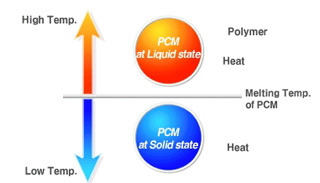
- 잠열(Latent heat)이란?
  • 어떤 물질이 상전이될 때 즉, 고체에서 액체(또는 액체에서 고체), 액체에서 기체 (또는 기체에서 액체)가 될 때 열을 흡수하거나 방출하게 되는데 이러한 열을 잠열이라 한다. 이 잠열은 현열(sensible heat), 즉 상전이가 일어나지 않은 상태에서 온도변화에 따라 흡수(또는 방출)하는 열보다 매우 크다. 물의 경우 섭씨 0도 얼음(고체)에서 물(액체)로 바뀔 때 1 g당 80 cal(335J)의 열을 흡수한다. 이러한 열은 같은양의 섭씨 0도의 물을 80도까지 올릴 때 필요한 열량과 같다. 잠열의 큰 열흡수/방출 효과를 이용하여 에너지를 저장하거나 온도를 일정하게 유지시키는 목적으로 사용할 수 있다. 상전이 온도 및 잠열량 등은 그 물질의 고유한 특성이어서, 물질마다 다르다. 사용 목적에 따라 적당한 물질을 선택할 경우 일상생활에 유용하게 쓰일 수 있다.

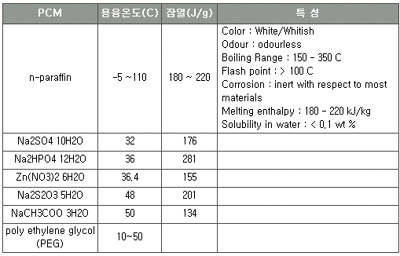
  • 잠열저장물질(Phase Change Materials, PCMs)의 종류 및 특성


*


- PCM 고정화 및 미세캡슐화
  • 잠열의 특성을 잘 이용할 경우 적은 부피에 많은 열을 저장할 수 있다. 각 물질마다 상전이 온도가 다르기 때문에 이를 이용하면 다양한 온도에서 열을 흡수 저장할 수 있다.

  • 그러나 에너지 저장을 위해 잠열이 크고 일정한 온도에서 상전이가 되는 물질(잠열저장물질)을 이용할 경우에는 고체와 액체 상태를 오가기 때문에 액체의 경우 일정한 형태가 없으며 유동성을 갖게 되는 문제점이 있다. 이러한 문제점으로 인하여 잠열저장물질을 실생활 등에 사용하기 힘들었다.

  • 이 문제점을 해결하기 위해 잠열저장물질을 코팅, 캡슐화하는 신기술이 개발되기 시작하였다. 잠열저장물질을 미세캡슐화할 경우 잠열저장물질을 쉽게 모듈화할 수 있으며, 광범위하게 응용될 수 있으며, 열전달 면적을 넓혀주는 효과가 있어 효율적인 단열 및 냉난방 시스템의 구축이 가능하다.


*


[ Heatsaver - SLC series ]
  • 보온/보냉 기능성 건축자재, 타일, 기능성 도료 등


[ Heatsaver - SLC series ]
  • 저온 : 공장용 또는 심야전력이용 빙냉식 에어콘 가정용 냉장고 등의 열저장 재료

  • 중온 : 기능성 의류, 군용 텐트, 반도체 온도조절용

  • 고온 : 보온 바닥재, 잠열저장 축열조, 콘크리트 및 wallboard에 의한 가정, 빌딩 냉난방용, 태양열을 이용한 스팀터어빈에 응용  


[ Heatsaverⓡ - PMMA ]
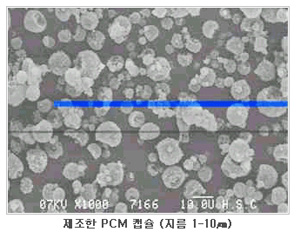
  • 잠열저장물질을 캡슐화한 제품으로 1 - 10 micron 크기의 구형 PMMA microsphere 고분자내에 PCM을 encapsulation시켜 고정화한다. 접촉면적이 넓고 75%이상의 높은 함량으로 PCM을 고정화시킴으로서 보다 작은 부피 내에 에너지를 효율적으로 저장할 수 있으며, 상변화에 따른 부피변화가 없다. 1000회 이상의 상변화 테스트를 통해 안정성을 검증. 다양한 PCM을 고정화시킬 수 있다.


*


*


[ Heatsaver - SLC series ]
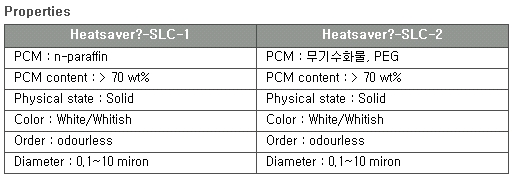
  • 잠열저장물질을 캡슐화한 제품으로 70% 정도의 PCM을 함유하고 있으며, 열에 안정하고 PCM의 상변화에 따른 부피변화가 없다. 용도에 따라서 또는 요구되는 물성에 따라 n-paraffin 및 무기염 수화물 등 다양한 PCM을 고정화시킬 수 있다.


*


[ 기능성 직물/섬유 ]
  • PCM과 섬유/직물을 접목시켜 고부가가치의 기능성 의류 등을 생산할 수 있다. 이를 위해서는 PCM이 액체 상태에서도 일정한 형태를 유지할 수 있도록 외부를 코팅하여 고정화시켜야 한다. 일정한 온도에서 상변화가 일어나는 잠열저장물질을 고정화하여 직물에 코팅시키게 되면 얇으면서도 우수한 방온 또는 방한 기능을 갖추게 된다. 일반적으로 여름용 의류일 경우 27-35도 사이에 상변화가 일어나는 PCM을 겨울용일 경우 20도 내외에서 상변화가 일어나는 물질을 선택하여 고정화시키게 된다.


[ PCM 보온 바닥재 ]
  • 국내 가정에서 가장 널리 사용되는 난방 시스템은 보일러에 의한 난방이다. 보일러에 의해 가열된 물이 배열된 파이프를 순환하며 자갈, 시멘트, 및 바닥재를 통해 열이 공급되어 실내의 온도를 높이게 된다. 보일러의 온수 온도는 초가을에는 50도이고 초봄 늦가을에는 70도이며 겨울에는 85도이다. 이렇게 주위의 온도보다 매우 높은 온도로 공급되는 온수에 의해 난방이 되기 때문에 주위로의 열손실이 많아지게 된다. 또한 자갈, 시멘트 및 바닥재는 일반적으로 열용량이 낮아 효과적으로 열을 흡수할 수 없다. PCM을 바닥재의 표층에 적용할 경우 공급되는 상전이 온도보다 높은 온도의 온수가 공급될 경우 열을 흡수하였다가 보일러의 가동이 중단되어 온도가 낮아지게 되면 열을 방출하여 실내의 온도가 원하는 온도 범위에서 오래 지속될 수 있도록 하며 에너지 비용을 절감시킨다.


열 흐름의 양자 역학적 성질(자기장으로 열 흐름 조절)
|
화학,화공


*
2005.04.19 16:26


물리 법칙을 매우 작은 수준에 적용한 양자 역학의 업적 중 하나는 전자와 같은 원자 이하의 입자에 의해 보여진 파동 성질이다. 두 경로에 위치한 전자는 파동 성질을 이용하고, 두 경로의 조건에 따라 자기 자신과 간섭하게 되어 목적지에서의 발견 확률을 높이거나 낮춘다.

이는 전자가 외부 자기장에 의해 변화되는 두 경로를 따라 이동하는 아로노프-봄 효과(Aharonov-Bohm effect)이다. 자기장을 변화시킴으로써 전자의 건설적 혹은 파괴적 간섭은 전기 흐름의 증가 혹은 감소로 나타난다. 최근 전자가 열과 전하를 이동한다는 사실을 이용하여 노스웨스턴 대학교(Northwestern University) 물리학자는 열 전도가 유사하게 조절될 수 있다는 증명하였다. 연구 결과는 4월 22일자 Physical Review Letters지에 게재될 것이다.

노스웨스턴의 웨인버그 예술과학대학(Northwestern's Weinberg College of Arts and Sciences) 물리학 교수인 Venkat Chandrasekhar와 대학원생 Zhigang Jiang은 하나의 정상 금속 경로와 하나의 초전도 경로를 갖는 나노장치인 안드리프 간섭계(Andreev interferometer)를 통한 열 흐름의 증가 혹은 감소에 자기장이 이용될 수 있다는 것을 증명하였다. 비록 이러한 장치에서 전자의 양자 간섭은 열 흐름 변화로 표현되지만 간섭계를 통한 전하의 흐름은 영이다. 최근에 연구진은 이러한 현상을 실험적으로 관찰하였다.

NFC (Near Field Communication) From Wikipedia


Near field communication

From Wikipedia, the free encyclopedia
*
This article's citation style may be unclear. The references used may be made clearer with a different or consistent style of citation, footnoting, orexternal linking. (September 2011)
*
An NFC-enabled mobile phone interacting with a SmartPoster
Near field communication, or NFC, allows for simplified transactions, data exchange, and wireless connections between two devices in proximity to each other, usually by no more than a few centimeters.[1] It is expected to become a widely used system for making payments by smartphone in the United States. Many smartphones currently on the market already contain embedded NFC chips that can send encrypted data a short distance ("near field") to a reader located, for instance, next to a retail cash register. Shoppers who have their credit card information stored in their NFC smartphones can pay for purchases by waving their smartphones near or tapping them on the reader, rather than using the actual credit card. Co-invented by NXP Semiconductors and Sony in 2002, NFC technology is being added to a growing number of mobile handsets to enable mobile payments, as well as many other applications.[2]
Though contactless or proximity cards are in use, their market penetration is limited, and bringing NFC to mobiles and other similar platforms may increase usage. NFC cannot be labeled a ‘new’ technology, as Nokia has been active in this line since 2004. Along with Philips and Sony, it has founded the NFC Forum. Participation of 130 countries in this forum clearly signals that NFC is set to become a way of life in the years to come.
The Near Field Communication Forum (NFC Forum) formed in 2004 promotes sharing, pairing, and transactions between NFC devices[3] and develops and certifies device compliance with NFC standards.[4] A smartphone or tablet with an NFC chip could make a credit card payment or serve as keycard or ID card. NFC devices can also read unpowered NFC tags,[5] for example on a museum or retail display. NFC can share a contact, photo, song, application, or video, or pair Bluetooth devices.
The 140 NFC Forum members include Samsung, Nokia, Huawei, HTC, Motorola, NEC, RIM, LG, Sony Ericsson, Toshiba, AT&T, Sprint, Rogers, SK, Google, Microsoft, PayPal, Visa, Mastercard, American Express, Intel, TI, Qualcomm, and NXP.[6]

[edit]Uses

N-Mark Logo for certified devices
Emerging NFC standards allow users to transfer information by touching devices.[7]

[edit]Social networking

NFC simplifies and expands social networking options:
  • File Sharing: Tap one NFC device to another to instantly share a contact, photo, song, application, video, or website link.[8]
  • Electronic business card: Tap one NFC device to another to instantly share electronic business cards or resumes.[9][10]
  • Electronic money: To pay a friend, you could tap the devices and enter the amount of the payment.
  • Mobile gaming: Tap one NFC device to another to enter a multiplayer game.[8][11]
  • Friend-to-friend: You could touch NFC devices together to Facebook friend each other or share a resume or to "check-in" at a location.[12]

[edit]Bluetooth and WiFi Connections

NFC can be used to initiate higher speed wireless connections for expanded content sharing.[13]
  • Bluetooth: Instant Bluetooth Pairing can save searching, waiting, and entering codes. Touch the NFC devices together for instant pairing.[8][13]
  • WiFi: Instant WiFi Configuration can configure a device to a WiFi network automatically. Tap an NFC device to an NFC enabled router.[13]

[edit]eCommerce

NFC expands eCommerce opportunities, increases transaction speed and accuracy, while reducing staffing requirements. A Personal identification number (PIN) is usually only required for payments over $100 (in Australia) and £15 (in UK).[9]
  • Mobile payment: An NFC device may make a payment like a credit card by touching a payment terminal at checkout or a vending machine when a PIN is entered.[9][8][14]
  • PayPal: PayPal may start a commercial NFC service in the second half of 2011.[15][16]
  • Google Wallet is an Android app that stores virtual versions of your credit cards for use at checkout when a PIN is used.[14]
  • Ticketing: Tap an NFC device to purchase rail, metro, airline, movie, concert, or event tickets. A PIN is required.[9][17][18]
  • Boarding pass: A NFC device may act as a boarding pass, reducing check-in delays and staffing requirements.[9]
  • Point of Sale: Tap an SmartPoster tag to see information, listen to an audio clip, watch a video, or see a movie trailer.[12][13]
  • Coupons: Tapping an NFC tag on a retail display or SmartPoster may give the user a coupon for the product.[12][13]
  • Tour guide: Tap a passive NFC tag for information or an audio or video presentation at a museum, monument, or retail display (much like a QR Code).[8][12]

[edit]Identity documents

NFC's short range helps keep encrypted identity documents private.[13]
  • ID card: An NFC enabled device can also act as an encrypted student, employee, or personal ID card or medical ID card.[13]
  • Keycard: An NFC enabled device may serve as car, house, and office keys.[13]
  • Rental Car and hotel keys: NFC rental car or hotel room keys may allow fast VIP check-in and reduce staffing requirements.[8][19]

[edit]History

NFC traces its roots back to Radio-frequency identification, or RFID. RFID allows a reader to send radio waves to a passive electronic tag for identification and tracking.
  • 1983 The first patent to be associated with the abbreviation RFID was granted to Charles Walton.[20]
  • 2004 Nokia, Philips and Sony established the Near Field Communication (NFC) Forum[21]
  • 2006 Initial specifications for NFC Tags[22]
  • 2006 Specification for "SmartPoster" records[23]
  • 2006 Nokia 6131 was the first NFC phone[24]
  • 2009 In January, NFC Forum released Peer-to-Peer standards to transfer contact, URL, initiate Bluetooth, etc.[25]
  • 2010 Samsung Nexus S: First Android NFC phone shown[26][27]
  • 2011 Google I/O "How to NFC" demonstrates NFC to initiate a game and to share a contact, URL, app, video, etc.[8]
  • 2011 NFC support becomes part of the Symbian mobile operating system with the release of Symbian Anna version. [28]
  • 2011 RIM 2011 is the first company for its devices is certified by MasterCard Worldwide, the functionality of PayPass[29]

[edit]Essential specifications

NFC is a set of short-range wireless technologies, typically requiring a distance of 4 cm or less. NFC operates at 13.56 MHz on ISO/IEC 18000-3 air interface and at rates ranging from 106 kbit/s to 424 kbit/s. NFC always involves an initiator and a target; the initiator actively generates an RF field that can power a passive target. This enables NFC targets to take very simple form factors such as tags, stickers, key fobs, or cards that do not require batteries. NFC peer-to-peer communication is possible, provided both devices are powered.[3] A patent licensing program for NFC is currently under development by Via Licensing Corporation, an independent subsidiary of Dolby Laboratories. A public, platform-independent NFC library is released under the free GNU Lesser General Public License by the name libnfc.[30]
NFC tags contain data and are typically read-only but may be rewriteable. They can be custom-encoded by their manufacturers or use the specifications provided by the NFC Forum, an industry association charged with promoting the technology and setting key standards. The tags can securely store personal data such as debit and credit card information, loyalty program data, PINs and networking contacts, among other information. The NFC Forum defines four types of tags which provide different communication speeds and capabilities in terms of configurability, memory, security, data retention and write endurance. Tags currently offer between 96 and 4,096 bytes of memory.
  • As with proximity card technology, near-field communication uses magnetic induction between two loop antennas located within each other's near field, effectively forming an air-core transformer. It operates within the globally available and unlicensed radio frequency ISM band of 13.56 MHz. Most of the RF energy is concentrated in the allowed 14 kHz bandwidth range, but the full spectral envelope may be as wide as 1.8 MHz when using ASK modulation.[31]
  • Theoretical working distance with compact standard antennas: up to 20 cm (practical working distance of about 4 centimetres)
  • Supported data rates: 106, 212 or 424 kbit/s (the bit rate 848 kbit/s is not compliant with the standard ISO/IEC 18092)
  • There are two modes:
    • Passive communication mode: The initiator device provides a carrier fields and the target device answers by modulating the existing field. In this mode, the target device may draw its operating power from the initiator-provided electromagnetic field, thus making the target device a transponder.
    • Active communication mode: Both initiator and target device communicate by alternately generating their own fields. A device deactivates its RF field while it is waiting for data. In this mode, both devices typically have power supplies.
      kbit/s
      Active device
      passive device
      424 kbit/s
      Manchester, 10% ASK
      Manchester, 10% ASK
      212 kbit/s
      Manchester, 10% ASK
      Manchester, 10% ASK
      106 kbit/s
      Modified Miller, 100% ASK
      Manchester, 10% ASK

      • NFC employs two different codings to transfer data. If an active device transfers data at 106 kbit/s, a modified Miller coding with 100%modulation is used. In all other cases Manchester coding is used with a modulation ratio of 10%.
      • NFC devices are able to receive and transmit data at the same time. Thus, they can check for potential collisions if the received signal frequency does not match with the transmitted signal’s frequency.

      [edit]Comparison with Bluetooth

      NFC
      Bluetooth
      Bluetooth Low Energy
      RFID compatible
      ISO 18000-3
      active
      active
      Standardisation body
      ISO/IEC
      Bluetooth SIG
      Bluetooth SIG
      Network Standard
      ISO 13157 etc.
      IEEE 802.15.1
      IEEE 802.15.1
      Network Type
      Point-to-point
      WPAN
      WPAN
      Cryptography
      not with RFID
      available
      available
      Range
      < 0.2 m
      ~10 m (class 2)
      ~100 m
      Frequency
      13.56 MHz
      2.4–2.5 GHz
      2.4–2.5 GHz
      Bit rate
      424 kbit/s
      2.1 Mbit/s
      ~1.0 Mbit/s
      Set-up time
      < 0.1 s
      < 6 s
      < 0.006 s
      Power consumption
      < 15mA (read)
      varies with class
      < 15 mA (transmit or receive)

      NFC and Bluetooth are both short-range communication technologies which are integrated into mobile phones. As described in technical detail below, NFC operates at slower speeds than Bluetooth, but consumes far less power and doesn’t require pairing.
      NFC sets up faster than standard Bluetooth, but is not faster than Bluetooth low energy. With NFC, instead of performing manual configurations to identify devices, the connection between two NFC devices is automatically established quickly: in less than a tenth of a second. The maximum data transfer rate of NFC (424 kbit/s) is slower than that of Bluetooth V2.1 (2.1 Mbit/s). With a maximum working distance of less than 20 cm, NFC has a shorter range, which reduces the likelihood of unwanted interception. That makes NFC particularly suitable for crowded areas where correlating a signal with its transmitting physical device (and by extension, its user) becomes difficult.
      In contrast to Bluetooth, NFC is compatible with existing passive RFID (13.56 MHz ISO/IEC 18000-3) infrastructures. NFC requires comparatively low power, similar to the Bluetooth V4.0 low energy protocol. However, when NFC works with an unpowered device (e.g. on a phone that may be turned off, a contactless smart credit card, a smart poster, etc.), the NFC power consumption is greater than that of Bluetooth V4.0 Low Energy, this is because illuminating the passive tag needs extra power.

      [edit]Standardization bodies and industry projects

      [edit]Standards

      NFC was approved as an ISO/IEC standard on December 8, 2003 and later as an ECMA standard.
      NFC is an open platform technology standardized in ECMA-340 and ISO/IEC 18092. These standards specify the modulation schemes, coding, transfer speeds and frame format of the RF interface of NFC devices, as well as initialization schemes and conditions required for data collision-control during initialization for both passive and active NFC modes. Furthermore, they also define the transport protocol, including protocol activation and data-exchange methods. The air interface for NFC is standardized in:
      ISO/IEC 18092 / ECMA-340
      Near Field Communication Interface and Protocol-1 (NFCIP-1)[32]
      ISO/IEC 21481 / ECMA-352
      Near Field Communication Interface and Protocol-2 (NFCIP-2)[33]
      NFC incorporates a variety of existing standards including ISO/IEC 14443 both Type A and Type B, and FeliCa. NFC enabled phones work basically, at least, with existing readers. Especially in "card emulation mode" a NFC device should transmit, at a minimum, a unique ID number to an existing reader.
      In addition, the NFC Forum has defined a common data format called NFC Data Exchange Format (NDEF), which can store and transport various kinds of items, ranging from any MIME-typed object to ultra-short RTD-documents,[34] such as URLs.
      The NFC Forum added the Simple NDEF Exchange Protocol to the spec which allows sending and receiving messages between two NFC-enabled devices.[35]

      [edit]GSMA

      The GSM Association (GSMA) is the global trade association representing nearly 800 mobile phone operators and more than 200 product and service companies across 219 countries. Many of its members have led NFC trials around the world and are now preparing services for commercial launch.[36]
      GSM is involved with several initiatives:
      • Standard setting: GSMA is developing certification and testing standards to ensure the global interoperability of NFC services.[36]
      • The Pay-Buy-Mobile initiative seeks to define a common global approach to using Near Field Communications (NFC) technology to link mobile devices with payment and contactless systems.[37][38]
      • On November 17, 2010, after two years of discussions, AT&T, Verizon and T-Mobile launched a joint venture intended to develop a single platform on which technology based on the Near Field Communication (NFC) specifications can be used by their customers to make mobile payments. The new venture, known as ISIS, is designed to usher in the broad deployment of NFC technology, allowing NFC-enabled cell phones to function similarly to credit cards for the 200 million customers using cell phone service provided by any of the three carriers throughout the United States.

      [edit]StoLPaN

      StoLPaN (‘Store Logistics and Payment with NFC’) is a pan-European consortium supported by the European Commission’s Information Society Technologies program. StoLPaN will examine the as yet untapped potential for the new kind of local wireless interface, NFC and mobile communication.

      [edit]NFC Forum

      The NFC Forum is a non-profit industry association formed on March 18, 2004, by NXP Semiconductors, Sony and Nokia to advance the use of NFC short-range wireless interaction in consumer electronics, mobile devices and PCs. The NFC Forum promotes implementation and standardization of NFC technology to ensure interoperability between devices and services. As of March 2011, the NFC Forum had 135 member companies.[39]

      [edit]Alternative Form Factors

      To realize the benefits of NFC in cellphones not yet equipped with built in NFC chips a new line of complementary devices were created. MicroSD and UICC SIM cards were developed to incorporate industry standard contactless smartcard chips with ISO14443 interface, with or without built-in antenna. The microSD and SIM form factors with built-in antenna have the great potential as bridge devices to shorten the time to market of contactless payment and couponing applications, while the built in NFC contollers gain enough market share.

      [edit]Other standardization bodies

      Other standardization bodies that are involved in NFC include:
      • ETSI / SCP (Smart Card Platform) to specify the interface between the SIM card and the NFC chipset.
      • GlobalPlatform to specify a multi-application architecture of the secure element.
      • EMVCo for the impacts on the EMV payment applications

      [edit]Security aspects

      Although the communication range of NFC is limited to a few centimeters, NFC alone does not ensure secure communications. In 2006, Ernst Haselsteiner and Klemens Breitfuß described different possible types of attacks, and detail how to leverage NFC's resistance to Man-in-the-middle attacks to establish a specific key.[40] Unfortunately, as this technique is not part of the ISO standard, NFC offers no protection against eavesdropping and can be vulnerable to data modifications. Applications may use higher-layer cryptographic protocols (e.g., SSL) to establish a secure channel. Ensuring security for NFC data will require the cooperation of multiple parties: device providers, who will need to safeguard NFC-enabled phones with strong cryptography and authentication protocols; customers, who will need to protect their personal devices and data with passwords, keypad locks, and anti-virus software; and application providers and transaction parties, who will need to use anti-virus and other security solutions to prevent spyware and malware from infecting systems.[41]

      [edit]Eavesdropping

      The RF signal for the wireless data transfer can be picked up with antennas. The distance from which an attacker is able to eavesdrop the RF signal depends on numerous parameters, but is typically a small number of metres.[42] Also, eavesdropping is highly affected by the communication mode. A passive device that doesn't generate its own RF field is much harder to eavesdrop on than an active device. Oneopen source device that is able to eavesdrop on passive and active NFC communications is the Proxmark instrument[43].

      [edit]Data modification

      It is relatively easy to destroy data by using an RFID jammer. There is no way currently to prevent such an attack. However, if NFC devices check the RF field while they are sending, it is possible to detect attacks.
      It is much more difficult to modify data in such a way that it appears to be valid to users. To modify transmitted data, an intruder has to deal with the single bits of the RF signal. The feasibility of this attack, (i.e., if it is possible to change the value of a bit from 0 to 1 or the other way around), is amongst others subject to the strength of the amplitude modulation. If data is transferred with the modified Miller coding and a modulation of 100%, only certain bits can be modified. A modulation ratio of 100% makes it possible to eliminate a pause of the RF signal, but not to generate a pause where no pause has been. Thus, only a 1which is followed by another 1 might be changed. Transmitting Manchester-encoded data with a modulation ratio of 10% permits a modification attack on all bits.

      [edit]Relay attack

      Because NFC devices usually include ISO/IEC 14443 protocols, the relay attacks described are also feasible on NFC.[44][45] For this attack the adversary has to forward the request of the reader to the victim and relay back its answer to the reader in real time, in order to carry out a task pretending to be the owner of the victim’s smart card. One of libnfc code examples demonstrates a relay attack using only two stock commercial NFC devices.

      [edit]Lost property

      Losing the NFC RFID card or the mobile phone will open access to any finder and act as a single-factor authenticating entity. Mobile phones protected by a PIN code acts as a single authenticating factor. A way to defeat the lost-property threat requires an extended security concept that includes more than one physically independent authentication factor.

      [edit]Walk-off

      Lawfully opened access to a secure NFC function or data is protected by time-out closing after a period of inactivity.[citation needed][original research?] Attacks may happen despite provisions to shutdown access NFC after the bearer has become inactive. The known concepts described primarily do not address the geometric distance of a fraudulent attacker using a lost communication entity against lawful access from the actual location of the registered bearer. Additional feature to cover such attack scenario dynamically shall make use of a second wireless authentication factor that remains with the bearer in case of lost NFC communicator. Relevant approaches are described as an electronic leash or its equivalent, a wireless key.